

Where to See Wildlife in New Zealand (While Your Pet Holds the Fort at Home)
Updated: Oct 15
Updated 15 October 2026
You’ve arranged the pet sitter. Left instructions about dinner, favourite toys and which particular patch of sofa belongs to the cat.
Now you’re heading to New Zealand – where an entirely different collection of animals awaits.
Kiwi foraging after dark. Dolphins appearing beside a boat. Little penguins returning from a day at sea. And, if you’re missing canine company, a few rather talented working dogs.
You’ll probably still ask for photos of your pet. But between updates, there are some wonderful wildlife experiences to build into your New Zealand holiday.
Here’s where I’d start.


Where can you see wildlife in New Zealand?
What you’d like to see | Places to consider | What to plan for |
Kiwi | Rakiura/Stewart Island, Zealandia in Wellington, Willowbank in Christchurch | Choose between a guided outdoor experience and a nocturnal house |
Dolphins | Akaroa, the Bay of Islands, Kaikōura | Different species and experiences; allow for sea conditions |
Whales | Kaikōura | A dedicated excursion, with some flexibility for weather |
Little penguins | Ōamaru | Evening viewing timed around the birds’ return |
Yellow-eyed penguins / hoiho | Otago Peninsula | A guided conservation-focused experience |
Fur seals and sea lions | Kaikōura, Otago Peninsula and the southern coast | Watch from a distance and follow local guidance |
Native forest birds | Zealandia, Ulva Island and other sanctuaries | Time to walk slowly, listen and look |
Underwater wildlife | Poor Knights Islands, off the Tutukākā Coast | A suitable boat, snorkelling or diving excursion |
Working dogs and farm animals | Hosted farm experiences, including Walter Peak near Queenstown | A rural experience rather than a wild encounter |
You don’t need to fit all of these into one holiday. Choosing the animals that interest you most helps us work out which places deserve time in your journey.

1. Seeing a kiwi: choose the experience that suits you
Let’s begin with the bird everyone hopes to meet.
Kiwi aren’t something you can expect to spot beside the road between breakfast and your next hotel. For most visitors, seeing one takes a little planning.
There are several ways to approach it:
Rakiura/Stewart Island: a guided wild kiwi excursion offers an opportunity to look for southern brown kiwi, or tokoeka, in their natural environment.
Zealandia, Wellington: a guided night tour explores the sanctuary after dark, with the possibility of seeing little spotted kiwi among other nocturnal species.
Willowbank, Christchurch: a purpose-built nocturnal house offers a managed setting for viewing kiwi during a daytime visit.
These are different experiences. An evening outdoors brings atmosphere and uncertainty; a nocturnal house can fit more easily into a city stay.
If seeing kiwi is a priority, tell us early so we can choose an appropriate option. Wild sightings are never something I’d promise.
Your dog may have mastered the soulful stare. A kiwi has a rather impressive nose of its own.
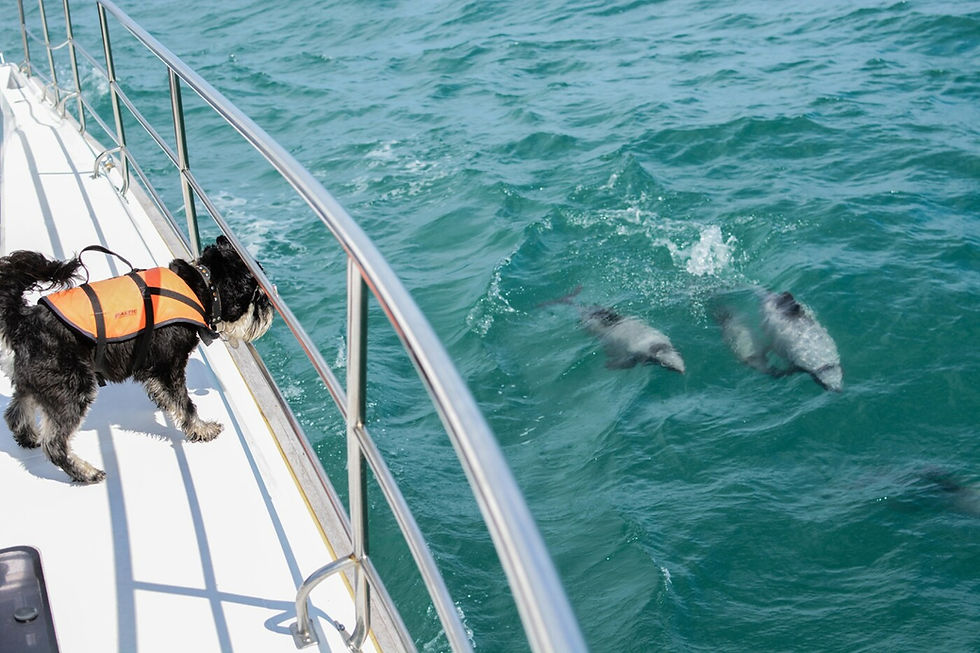
2. Dolphins – and a boat with canine crew
Dolphin watching can be one of those experiences where conversation suddenly stops and everyone looks in the same direction.
Akaroa, on Banks Peninsula near Christchurch, is a place to consider for Hector’s dolphins. A harbour cruise also gives you a different perspective on its volcanic coastline.
And there’s a particular detail dog lovers may appreciate: Akaroa Dolphins has dolphin-spotting dogs among its crew.
Life jackets. Important duties. A reasonable chance of attracting almost as much attention as the dolphins.
The Bay of Islands and Kaikōura offer other dolphin-watching possibilities, with different species, settings and excursions.
Choose the trip around the experience you want, and let the crew guide any encounter. The dolphins decide whether to make an appearance.

3. Whales in Kaikōura: give the day some breathing room
Kaikōura is a strong choice if whales are high on your wish list. Sperm whales are present in its offshore waters year-round, although that doesn’t guarantee a sighting on any particular trip.
A dedicated whale-watching excursion deserves time in the itinerary, with allowance for check-in, the outing itself and a relaxed return.
If it’s a major reason for visiting, I’d consider more than a brief overnight stop. Weather can disrupt marine excursions, and some flexibility may provide another opportunity if a departure is cancelled.
There’s plenty to enjoy on land, too: coastal scenery, local food and time around the peninsula.
The cat’s latest sleeping position will still be waiting in your messages when you get back.

4. Little penguins in Ōamaru: stay for the evening
Ōamaru is worth considering for more than its evening visitors.
Spend time among the whitestone buildings, independent shops and galleries, perhaps adding the wonderfully peculiar Steampunk HQ. Then head to a booked evening penguin viewing.
At Ōamaru Penguins, the birds you’re watching are little penguins, or kororā, returning from the sea.
The viewing time changes with the season, so this is something to plan around rather than squeeze in before driving elsewhere.
I’d usually prefer to have you staying locally. Enjoy the evening, follow the viewing rules and leave the onward journey for another day.
They may be small, but they can command an audience rather effectively.
5. Hoiho, albatross and wildlife on the Otago Peninsula
For yellow-eyed penguins, or hoiho, look at an appropriate guided experience on the Otago Peninsula.
These are a different species from Ōamaru’s little penguins, and their conservation needs make the choice of viewing experience important.
The peninsula also offers opportunities to learn about northern royal albatross at Pukekura/Taiaroa Head, with fur seals and sea lions adding to the region’s wildlife interest.
I’d choose an outing according to what you most want to see, the walking involved and the access available. A knowledgeable guide can help you notice things you would otherwise miss.
Dunedin makes a useful base, combining wildlife excursions with heritage streets, cafés and a very different kind of city stay.

6. Seals and sea lions: admire the professionals at resting
If your pet has perfected the art of occupying the best sunny spot, you may recognise the approach.
New Zealand fur seals, or kekeno, can be seen around parts of the coast, including Kaikōura and the Otago region. Sea lions are a particular possibility along the southern coast.
Keep at least 20 metres away from seals and sea lions, and more where local signs or guides require it. Never block their route to the sea.
A resting animal needs space, even if it appears completely unconcerned by your presence. Use your camera’s zoom and give it the beach.
Coastal wildlife can be a rewarding part of exploring the Catlins and Clutha, but sightings should remain a possibility rather than the measure of whether the day was worthwhile.

7. Native birds: slow down and listen
Some of New Zealand’s most enjoyable wildlife encounters begin with a sound.
A tūī calling above a garden. A fantail moving through the trees. The sudden interest of a kākā overhead.
Sanctuaries such as Zealandia and Ulva Island/Te Wharawhara offer opportunities to spend time among native birdlife, with guided options that help visitors recognise what they’re hearing and seeing.
If you visit Ulva Island, make the birdlife and forest the focus. A daytime kiwi sighting would be a lucky bonus, not something to count on.
In the South Island’s mountain regions, you may also encounter kea. They’re intelligent, curious parrots with considerable enthusiasm for investigating things.
Enjoy watching them, keep belongings secure and never feed them.
Your cat would probably respect their investigative approach. Whether it would approve of the noise is another matter.

8. Working dogs and farm visits: a little familiar company
Farm animals aren’t wildlife, but they deserve a place in this article – especially if you’re missing a wet nose and a wagging tail.
A hosted farm visit can introduce you to rural New Zealand, its animals and the people who work with them.
At Walter Peak near Queenstown, farm experiences include sheepdog demonstrations and opportunities to meet farm animals, with a lake crossing forming part of the outing.
Watching a skilled dog respond to its handler is fascinating, even if your own dog considers “come here” more of a discussion.
The right farm experience depends on your interests. We can look for something that suits, whether that’s working dogs, farming stories or a gentle outing with animal encounters.

9. Auckland Zoo and Willowbank: wildlife within a city stay
You don’t need to travel to a remote location to learn about New Zealand’s animals.
Auckland Zoo offers opportunities to see native species and learn about conservation alongside its wider animal collection.
Willowbank Wildlife Reserve, in Christchurch, brings together native species, farm animals and other animals, with its nocturnal kiwi house a particular reason to visit.
These are managed wildlife settings, with a different experience from watching animals in the wild. They can work well for visitors who want a more accessible introduction or have limited time in a city.
Check current viewing opportunities and accessibility before planning your visit around a particular animal.

10. Poor Knights Islands: there’s a whole other world below the boat
If your wildlife interests extend underwater, consider the Poor Knights Islands Marine Reserve off Northland’s Tutukākā Coast.
Dive! Tutukaka offers diving and snorkelling options, so you don’t necessarily need to be a certified diver to explore the marine life.
The right excursion depends on your swimming confidence, experience and comfort in open water. Discuss those details with the operator before booking.
This deserves its own day, with time allowed for the boat journey and sea conditions.
It could also be a reason to give Whangārei and the surrounding coast more attention in your North Island itinerary.
Your goldfish may have some competition when you get home.
A little planning makes wildlife experiences better
Wildlife keeps its own hours.
Penguin viewing may shape your evening. Kiwi spotting can mean being out after dark. Boat excursions depend on the sea, while birds and marine mammals won’t necessarily appear where they did yesterday.
When planning your journey, I’d consider:
Which animals you most hope to see.
Whether you prefer boats, walking, managed settings or a mixture.
Your walking ability and comfort after dark or on the water.
Whether a longer stay would give an important excursion more flexibility.
Follow guides and local signs, keep your distance, don’t feed wildlife and respect photography restrictions. Clean footwear and any required biosecurity checks are part of looking after the places you’ve come to enjoy.

Who would you like to meet in New Zealand?
A kiwi after dark? Dolphins in Akaroa Harbour? Penguins returning home, or a sheepdog who takes its job considerably more seriously than yours does?
Tell us which encounters appeal, and we’ll help work them into a journey with accommodation, transport and time to enjoy the places around them.
You can keep requesting updates from the pet sitter.
We’ll help with the New Zealand part.


